Unstructured in, structured out: AI in clinical supply
At the GCSG European Knowledge Forum in Rome, we joined a panel on where AI already earns its place in clinical supply, and what it takes to trust what it gives back.
Prognosis
5 min read
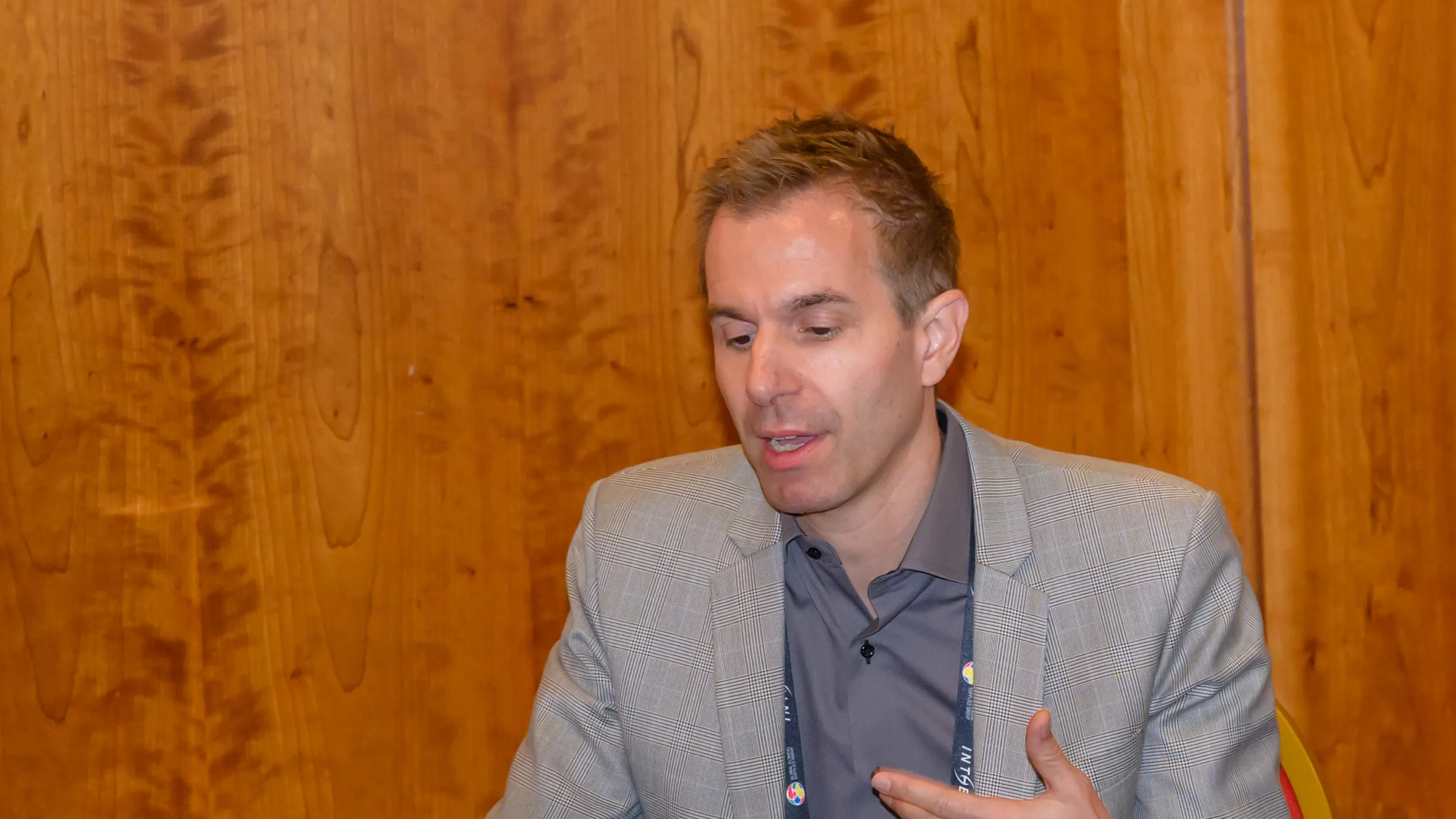
Pirmin Froehlicher, our Chief Product Officer, during the AI & Analytics session in Rome.
Session details
Event
GCSG European Knowledge Forum
Location
Rome, Italy
Date
Session
Case Study: AI & Analytics
Speaker
Pirmin FroehlicherChief Product Officer
On October 14, our Chief Product Officer, Pirmin Froehlicher, joined three other clinical supply practitioners at the Global Clinical Supplies Group's European Knowledge Forum in Rome. The panel had one hour and one question: where do AI and predictive analytics already earn their place in trial planning and execution, and what does it take to get there?
The session ran as a moderated panel with live polls and open Q&A, and the brief was to stay candid: what these tools do well, where they fall short, and the data a team needs in place before any of it pays off. These are the ideas from that hour we think are most useful to clinical supply teams, whatever their starting point.
Three layers of AI in clinical supply
Pirmin opened by separating AI work into three layers, because they carry very different levels of risk:
Trial optimization: smarter design, and modeling demand and supply.
Operational efficiency: automating the everyday workflows around a trial.
Product features: AI built into the systems teams rely on.
Adoption is easiest at the top and hardest at the bottom. Using AI to help model a forecast is one thing. Putting it inside a product a sponsor depends on is where caution is highest, and rightly so.
The anchor case: decoding protocols
Every supply plan starts with the protocol, and every protocol has to be read by someone. Treatment arms, visit schedules, enrollment projections, site lists and country rollouts all live in long documents, and every amendment means reading them again.
That manual digging is slow, and it is where supply risks hide: a dosing change buried in an appendix, a country added in an amendment, a visit window that quietly changes kit demand. The anchor case looked at pairing clinical supply expertise with AI to take on that work: finding the risks hidden in protocols and amendments, structuring the inputs a plan needs, and doing it safely inside strict pharma environments.
Two everyday tasks, done live
Rather than talk in the abstract, Pirmin ran two real clinical supply tasks live on screen. Neither was a product demo. Both used general-purpose AI tools that anyone in the room could try the next day.
Reading a protocol
A Phase 3 protocol went in as a PDF. The model pulled out what matters for supply planning (the number of patients, the treatment arms and the treatment schedule) and returned it as a structured table rather than a summary.
Reshaping an IRT export
An IRT depot inventory report went in as an Excel export. The model reshaped it into the format a forecasting system needs, with depots, kit types, quantities and expiry dates each in their own column.
Unstructured in, structured out
Both demos had one thing in common. AI models are very good at reading messy information, like a protocol or a system export, and turning it into clean, structured data in exactly the format you need.
AI does the heavy lifting. You check the result.
The second sentence matters as much as the first. The value is not that the model is always right. The value is that checking a clean table is far faster than building one by hand.
Six habits for results you can trust
It helps to separate two things. A tool is the hands: access to something, such as the ability to edit an Excel file. A skill is the know-how: doing the job well, such as getting the right data into the right columns. Good results need both, and these habits supply the know-how.
Provide an example. Show the output you expect: the columns, the date format, the units.
Don't let it guess. Tell the model to ask when something is unclear instead of filling the gap itself.
Check the totals. Row counts and sums should match before and after. For spreadsheets, ask the model to transform the file with formulas or code rather than retyping values.
Get a second opinion. Give the input and the output to a fresh chat, or another model, and ask it to find mistakes.
Save it as a skill. When a set of instructions works, keep it, so the same task gives the same result next time.
Protect your data. Use your company's approved AI account, never a personal one, and keep patient and confidential data out of personal tools.
Where the tools fall short
The panel was just as clear about the limits. A model can only consider so much at once, so very long documents need care. Output quality depends on the input it is given. And models do make mistakes, which is exactly why the habits above exist: every output should be checked against its source before anyone relies on it.
Readiness matters too. Predictive analytics can prevent overages, cut wastage and keep patients dosed on time in every country, but only once a team has the data and infrastructure in place to feed it.
Where Prognosis fits
The two demos mirror work we have built into our own platform. Prognosis Lens reads an uploaded protocol and drafts a trial's setup for the team to review, and Actuals imports IRT and RTSM files through column mapping and validation. The principle is the one Pirmin showed in Rome: let the model turn unstructured documents into structured inputs, and keep the people who know the trial in charge of checking them.
Thank you to the Global Clinical Supplies Group, to our fellow panelists, and to everyone who joined the session, voted in the polls and asked questions.